crafting connections
Crafting Connections:
Didukh as a Cultural Conversation
Nuit Blanche Toronto: Translating the City
October 4 – 5, 2025
St. Volodymyr Institute
Created by Oksana Hawrylak and Marta Iwanek
In this multimedia exhibit, you will feel, see and hear the making of the Ukrainian ancestral craft of didukh, connecting you to the cyclical rhythm of nature
Watch Crafting Connections: Didukh as a Cultural Conversation video:
-
[00:00–00:25] Preparing the soil
Panel 1 (Left): A hand breaks up soil, pulling out small clumps.
Panel 2: A pitchfork digs and lifts the earth, loosening the ground.
Panel 3: A person in green rain boots, jeans, a white shirt, and a straw hat rakes across the surface, clearing dried grass and leaves.
Panel 4 (Right): A rake pulls aside dried grasses; close-up of a hand removing weeds.
Sound: Scrape of tools, rustle of dried grass, birds chirping and a fire crackling in the background.
[00:26–00:40] Weeding and clearing
Panel 1: A gloved hand pulls weeds and loosens soil with a tool.
Panel 2: A person in straw hat and white shirt works beneath pine trees and blue sky; close-up of a tool breaking soil.
Panel 3: Close-up of a dirt-covered hand; a rake loosens clumps.
Panel 4: A close-up of green rainboots and hands that clear weeds from the ground.
Sound: Tools striking earth, popping sounds as weeds are pulled free from the earth, steady breeze.
[00:41–00:53] Sowing seeds
Panel 1: Close-up of seeds scattered into soil; seedlings begin to sprout.
Panel 2: A person in green rainboots, jeans, white shirt, and straw hat scatters seeds, pressing the soil with their boots.
Panel 3: A rake smooths the soil, faint green sprouts visible.
Panel 4: Close-up of a hand removing weeds from the row.
Sound: Seeds falling onto ground, seeds striking camera lens, rake brushing soil, birds chirping.
[00:54–01:04] Watering
Panel 1: Close-up of a seedling as water pours over it.
Panel 2: A person in rain boots and light pants waters young green strawflowers.
Panel 3: A watering can tips, water spilling onto the soil.
Panel 4: A burgundy strawflower begins to open in bloom.
Sound: Pour of water, gentle splash, bird chirping, leaves rustling.
[01:05–01:29] Growth
Panel 1: Watered seedlings become green wheat stalks bending in the wind.
Panel 2: Close-up of pink strawflower glowing at sunrise.
Panel 3: Wheat grass glistens with dew.
Panel 4: Young green strawflowers being watered, ending with lavender being harvested.
Sound: Wind in tall grass, cutting lavender stems with scissors, bird chirping.
[01:30–01:45] Growth
Panel 1: Green wheat bends in the wind.
Panel 2: Close-up of a pink strawflower in morning light.
Panel 3: Wheat grass glistens with dew.
Panel 4: Wheat stalks grow in a red pot with a city skyline at night.
Sound: Wind in grass, faint urban hum.
[01:46–02:01] Harvest
Panel 1: Green stalks sway in the wind. Two people harvest wheat with sickles in a field of gold and green.
Panel 2: Camera moves forward through a golden wheat field.
Panel 3: Close-up: tattooed arm cuts wheat with a sickle and places stalks in a pile.
Panel 4: A red pot of wheat is shown; close-up of sickle cutting stalks.
Sound: Slicing sound of sickles against wheat stalks, rustling stalks, breeze.
[02:01–02:23] Harvest continues
Panels 1–4: Close-ups of wheat stalks, sickles, and people harvesting in the field.
Sound: Layered sickle cuts, wheat brushing together, someone speaking Ukrainian in the background.
[02:23–02:46] Drying wheat and strawflower
Panel 1: Red, burgundy and white strawflowers hang in a bundle.
Panel 2: Wheat, rye, flax, and dried plants hang in bundles from rafters.
Panel 3: Close-up of red, burgundy and white strawflower bundle drying.
Panel 4: Wheat bundles hang in sunlight, golden stalks glowing.
Sound: Quiet room, rafters creaking; faint outdoor sounds.
[02:47–03:12] Preparing dried plants
Panel 1: Golden wheat placed on linen cloth by an arm in embroidered sleeve.
Panel 2: Close-up of hands sifting through flax, wheat, and dried grasses.
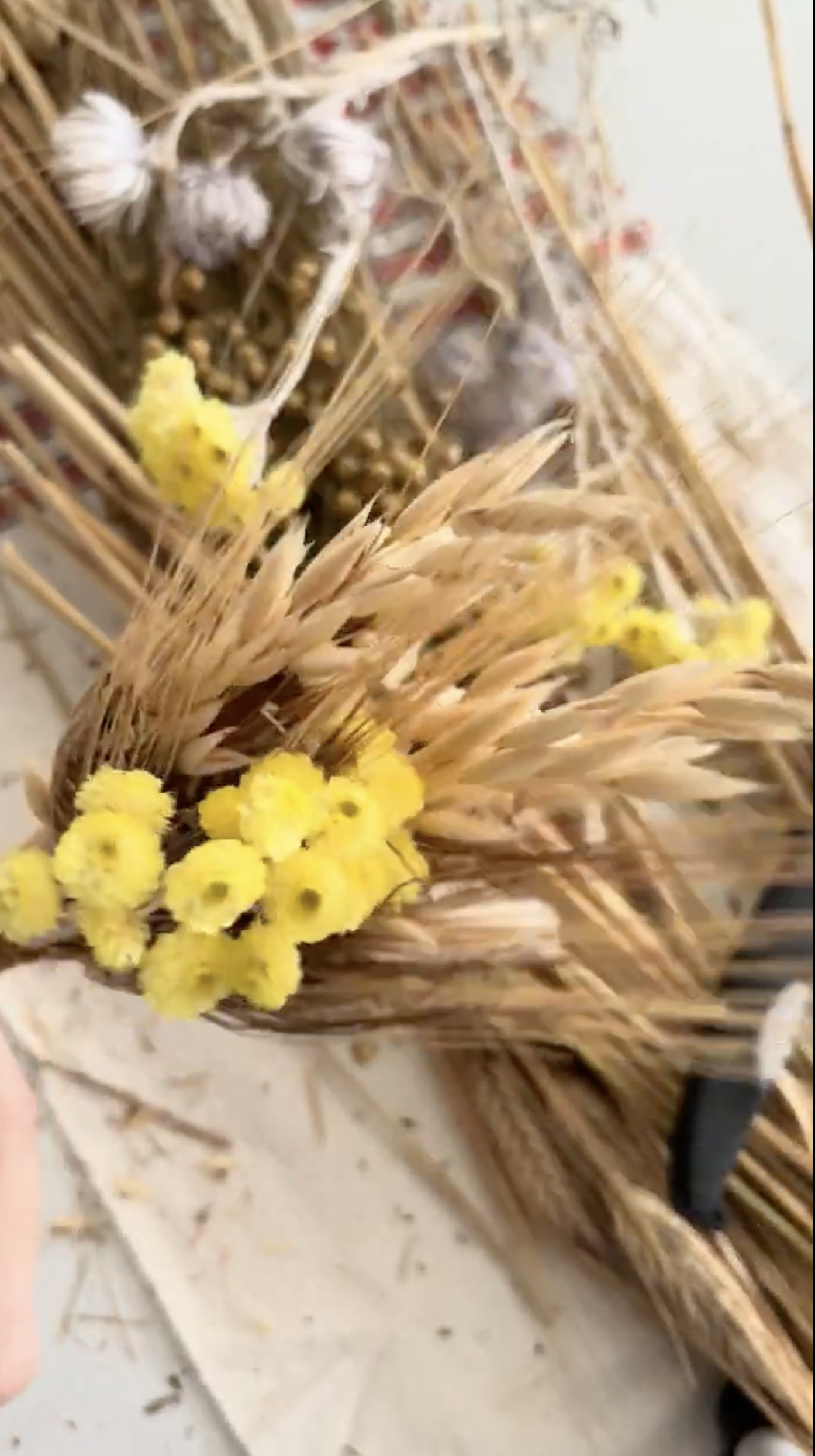
Panel 3: Bundles of flax, lavender, wheat, oats, and flowers arranged on linen tablecloth.
Panel 4: Dried flax and wheat pulled from a large canvas bag.
Sound: Soft rustle of stalks on fabric; sounds of stalks being pulled apart and separated.
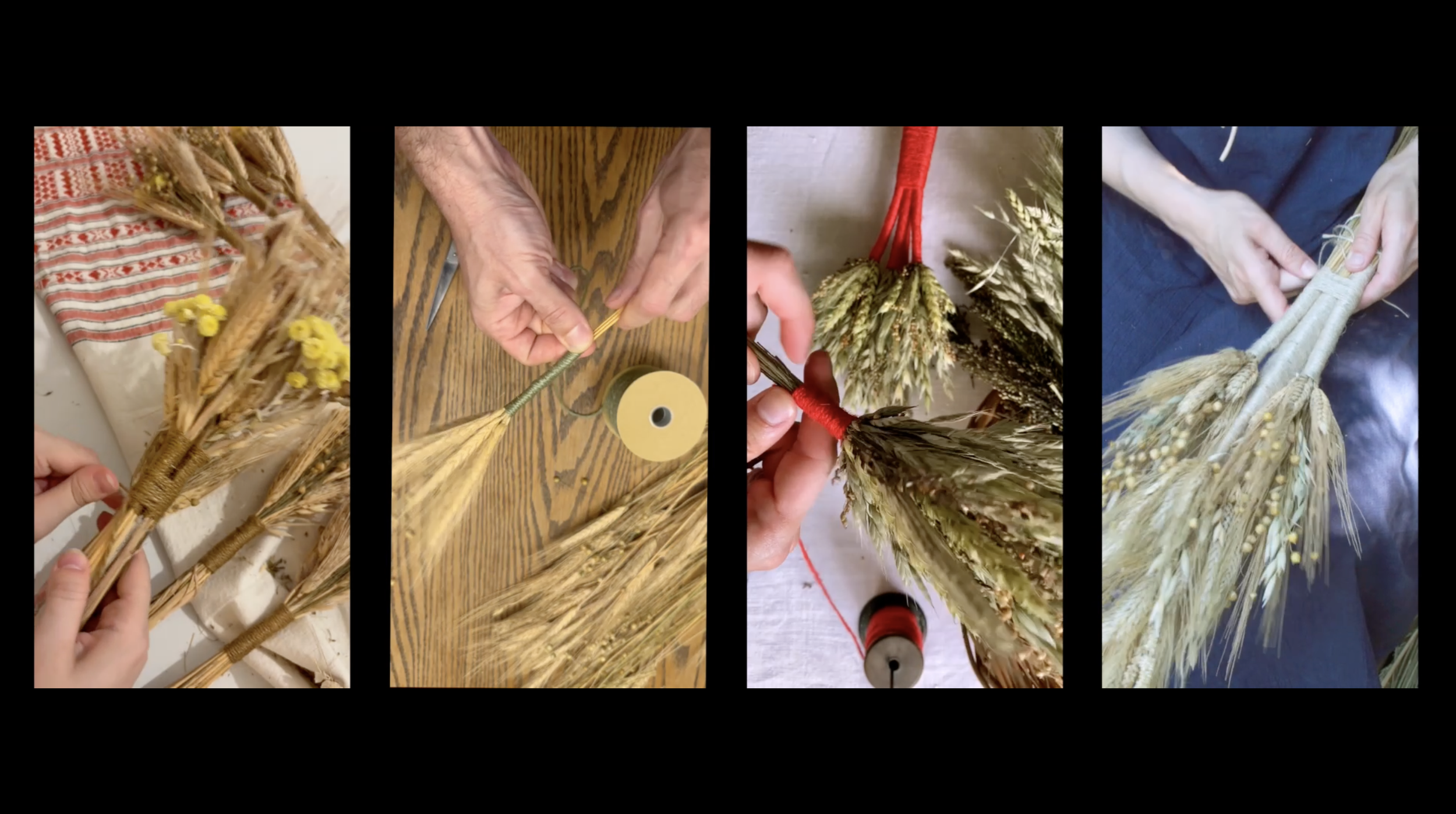
[03:13–03:36] Making the Didukh (first bundles)
Panel 1: Bundles of wheat and flowers wrapped with twine, pile of grasses behind.
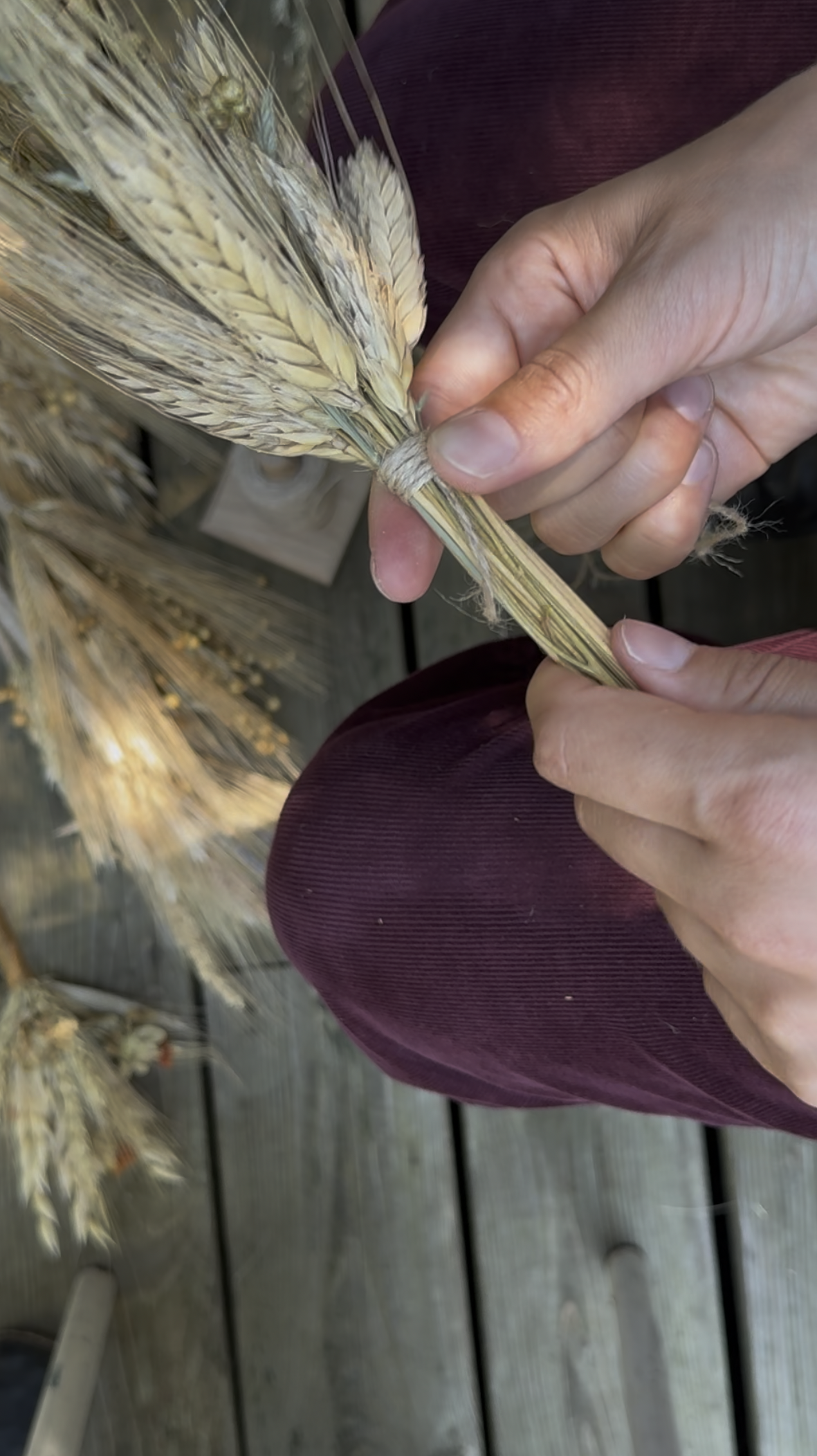
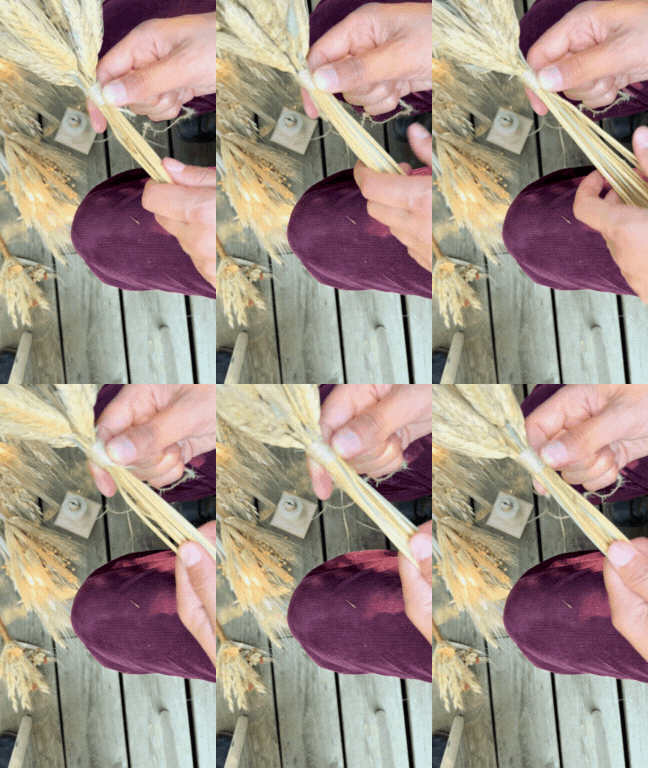
Panel 2: Close-up of two hands binding wheat, rye, and flax with twine.
Panel 3: Hands create a bundle of wheat and rye, wrapping with twine.
Panel 4: Hands pull oats, wheat, and flax from a bag, wrapping a bundle with twine.
Sound: Twine tightening, stalks brushing together, mourning dove cooing, hum of highway traffic.
[03:37–03:54] Making the Didukh (bundling continues)
Panel 1: A bundle of wheat and flowers wrapped with brown twine, grasses in the background.
Panel 2: Close-up: hands tie wheat, rye, and flax with light twine.
Panel 3: Multiple bundles tied together on a linen cloth.
Panel 4: A bundle adjusted and tightened with twine against a blue fabric backdrop.
Sound: Twine pulled taut, stalks shifting, rustling of dried grasses, birds chirping, hum of highway traffic.
[03:55–04:42] Making the Didukh (building body)
Panel 1: Bundles tied together with brown twine, forming the body of a wheat sheaf sculpture called a Didukh.
Panel 2: Close-up of hands binding wheat and flax with green twine; burgundy pants visible.
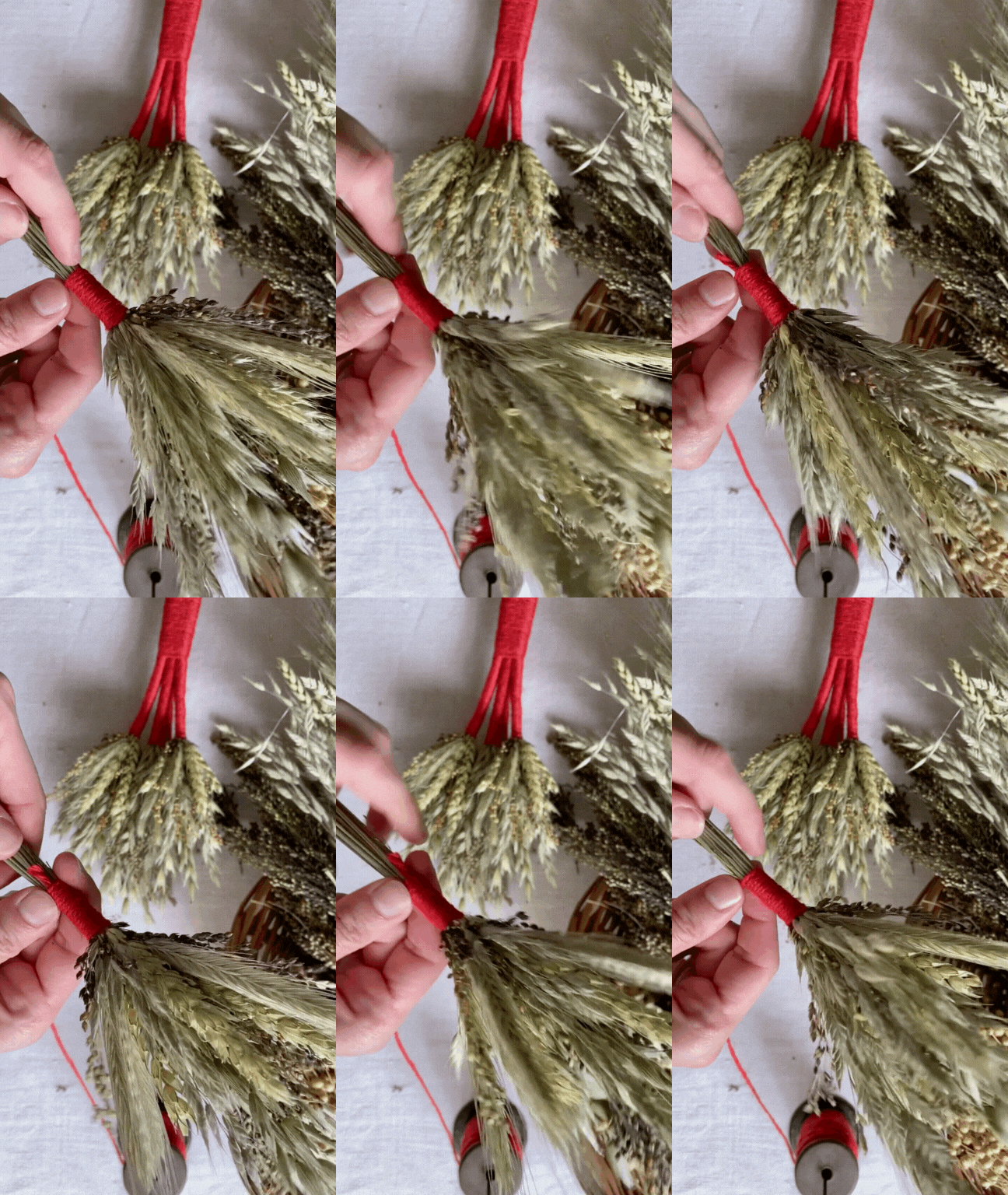
Panel 3: Bundles wrapped in red twine, didukh placed near grasses and a basket in the background.
Panel 4: Didukh body tied with light twine; blue fabric backdrop.
Sound: Twine twisting, soft brushing of stalks, Distant hum of highway traffic.
[04:43–04:56] Shaping the Didukh
Panel 1: Bundles bound into the Didukh body with brown twine.
Panel 2: Ends trimmed to create three legs like a tripod.
Panel 3: Didukh stands upright as straw is separated into three supports.
Panel 4: Close-up of pearly everlasting, wheat, flax, and lavender spun into bundles.
Sound: Snip of cutters, stalks snapping and falling on the table, mourning dove cooing.
[04:57–05:25] Decorating the Didukh
Panel 1: Finished Didukh placed on a rushnyk; hands in embroidered sleeves tie a white ribbon.
Panel 2: Legs arranged like a tripod; large ribbon tied at the centre.
Panel 3: Close-up of hands separating straw supports.
Panel 4: Close-up of Didukh top with grains, lavender, flax pods; snowy tree and house visible outside window.
Sound: Fabric moving, ribbon pulled tight, mourning dove cooing.
[05:09–05:50] Holiday table
Panel 1: Top view of a table set for four: rushnyk, dishes, candles, varenyky, pickled herring, cabbage rolls.
Panel 2: Table setting with embroidered cloth called a rushnyk, bowls, plates, candles, and glassware.
Panel 3: Top view: Didukh and a wheat bundle in a vase on rushnyk.
Panel 4: Didukh placed on woven rushnyk with linen cloth, ceramic vase, and Ukrainian woven carpet called a kilim in the background.
Sound: Clink of dishes on the table, match strikes, chatter in the background.
[05:50–06:27] Sviat Vechir dinner with Didukh centerpiece
Panel 1: Candles lit with matches; hands shield flames.
Panel 2: Close-up of Didukh and table; snow falling outside.
Panel 3: Plate with varenyky, buckwheat, and pickled herring; candles flicker.
Panel 4: Ladle pours borscht; Didukh placed on a rushnyk altar with beeswax candle.
Sound: Crackle of matches, clinking tableware, chatter in the background, moments of quiet and wind.
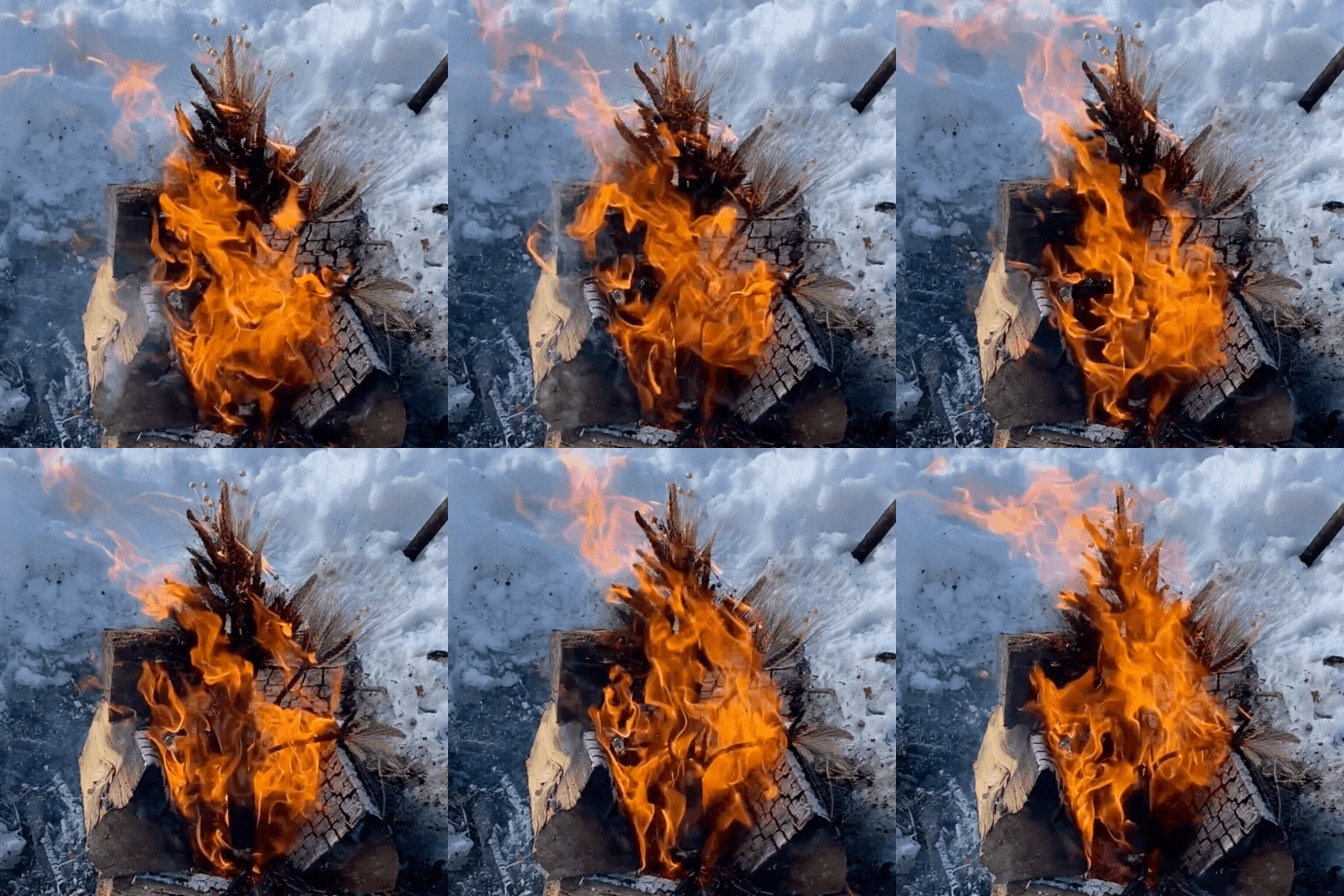
[06:28–07:05] Burning the Didukh
Panel 1: Didukh burns in close-up, collapsing into smoke.
Panel 2: Didukh placed in a bonfire; flames consume stalks.
Panel 3: Didukh burns on a pile of wood, smoke rising.
Panel 4: Snow falls over trees; Didukh burns in fire until only smoke remains.
Sound: Crackle of fire and wind, birds chirping
Crafting Connections: Didukh as a Cultural Conversation” invites audiences to experience the Ukrainian tradition of didukh, an "ancestor tree" made of a sheaf of wheat arrangement created in the fall and displayed during winter as a symbol of prosperity, ancestry, and renewal. Video projections in St. Volodymyr Institute (SVI)’s ground floor windows will share the process of harvesting, weaving, and assembling a didukh. These images bring the seasonal ritual into public view. Audiences will hear the textures of the process—wheat rustling, hands weaving—and be invited to touch raw materials at interactive stations. Participants will join live sessions with artists and volunteers, contributing to a growing display on the front lawn. A companion webpage will feature videos, profiles, and cultural context. “Crafting Connections” shares a Ukrainian folk tradition with a wider public, sparking conversation about heritage, land, and belonging through a hands on, multisensory experience.
Contributing participants:
Sasha Theodora
Bozena Hrycyna
Vlada Fedorchenko
Arnaud Brassard
Svitlana Harahan | Dukh Didukh
ABSTRKT (A/V)
Presented by:
This project has been made possible in part by: