
Paper Light – Contemporary Vytynanka Window Installation at SVI
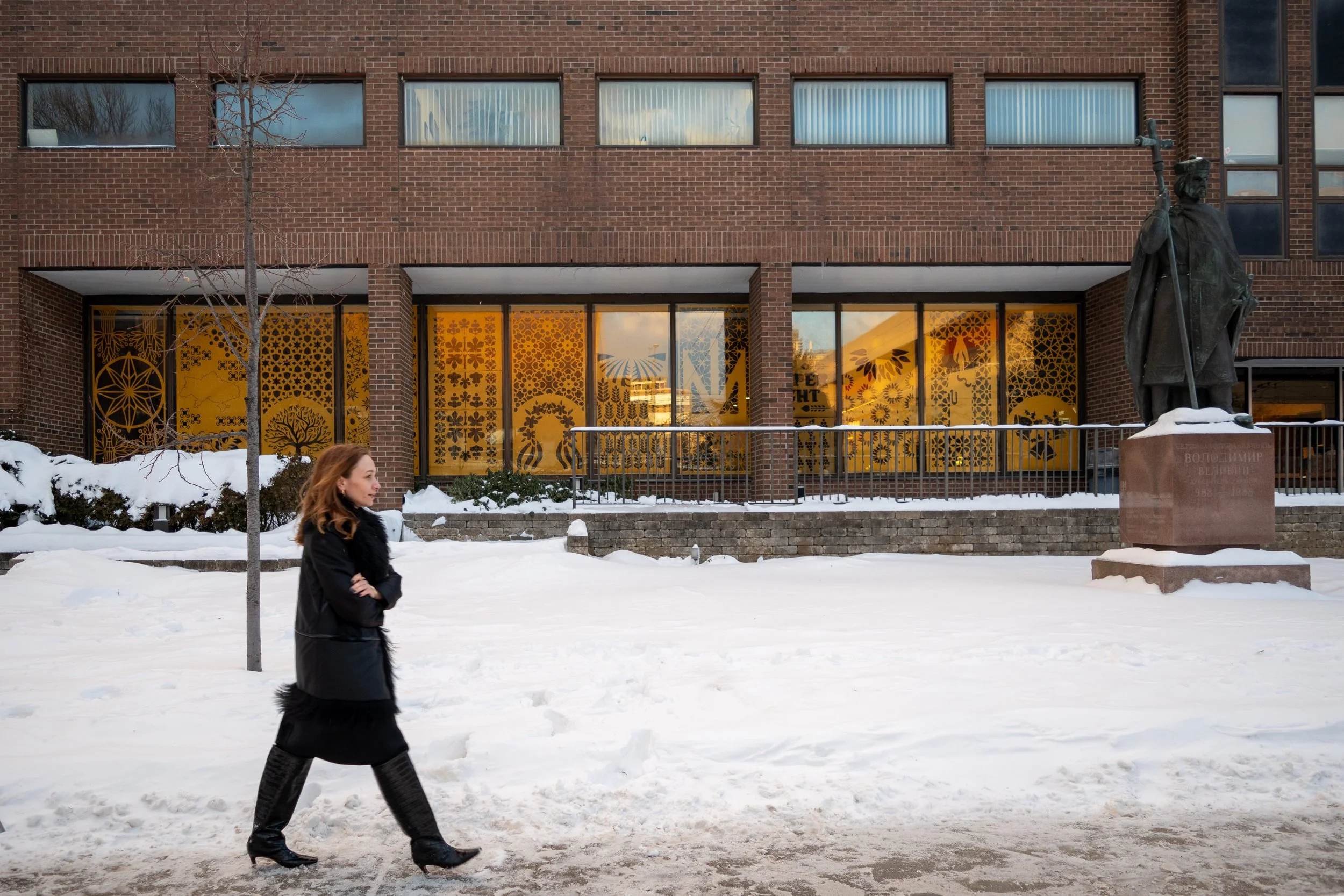
Photo credit Valeriia Vaprlnyk
Paper Light by artist Anastasiia Bielohryvtseva is a large-scale window installation presented as an independent project within DesignTO 2026, transforming the windows of the St. Volodymyr Institute in downtown Toronto into a luminous contemporary reinterpretation of Ukrainian vytynanka — a traditional 19th-century paper-cutting practice.
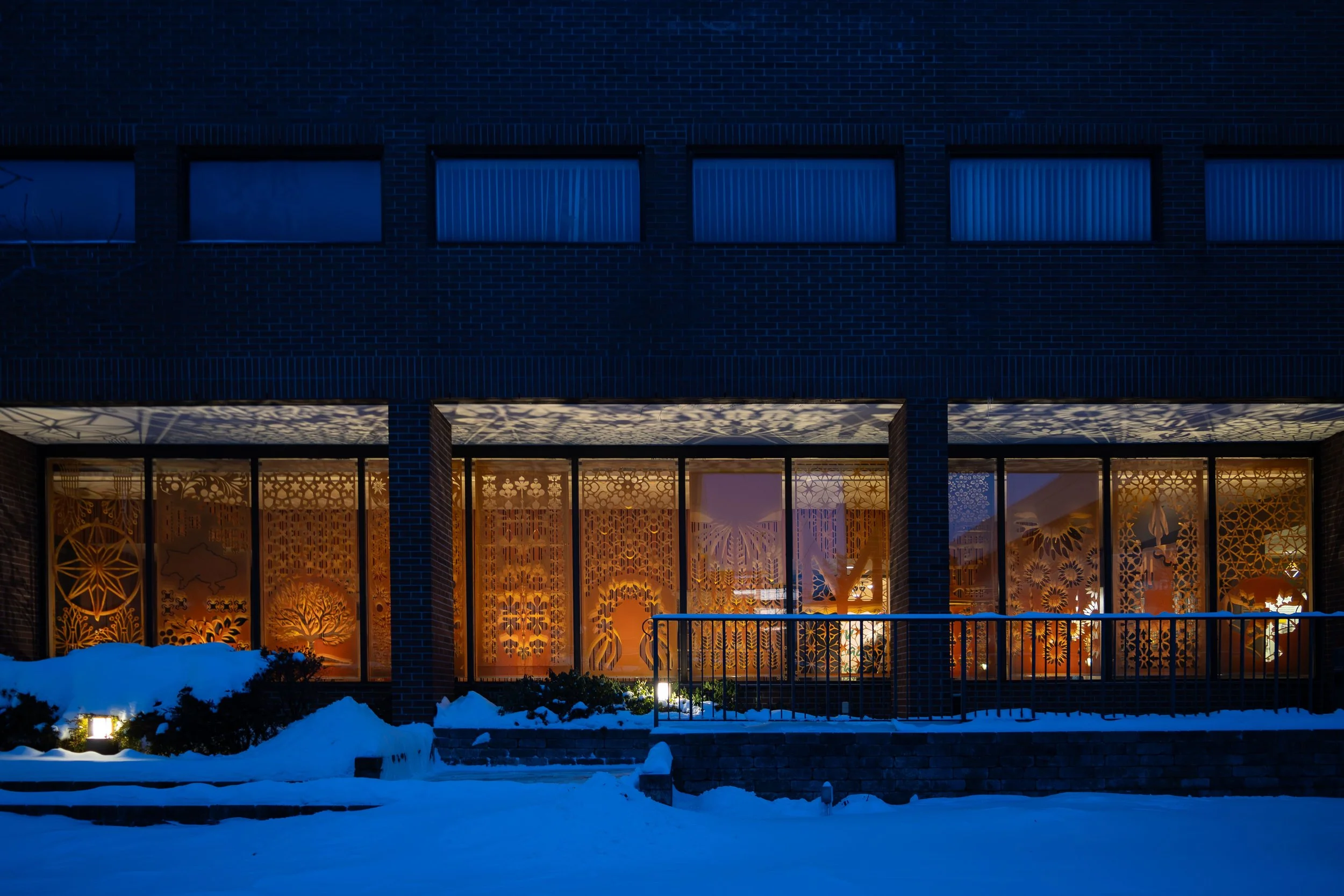
Spanning 36.6 square meters of hand-cut paper, the project brings a historically domestic craft into the public urban realm. Installed across twelve architectural windows, the work functions as both an artwork and a cultural signal — subtle, human-scaled, and deeply symbolic.
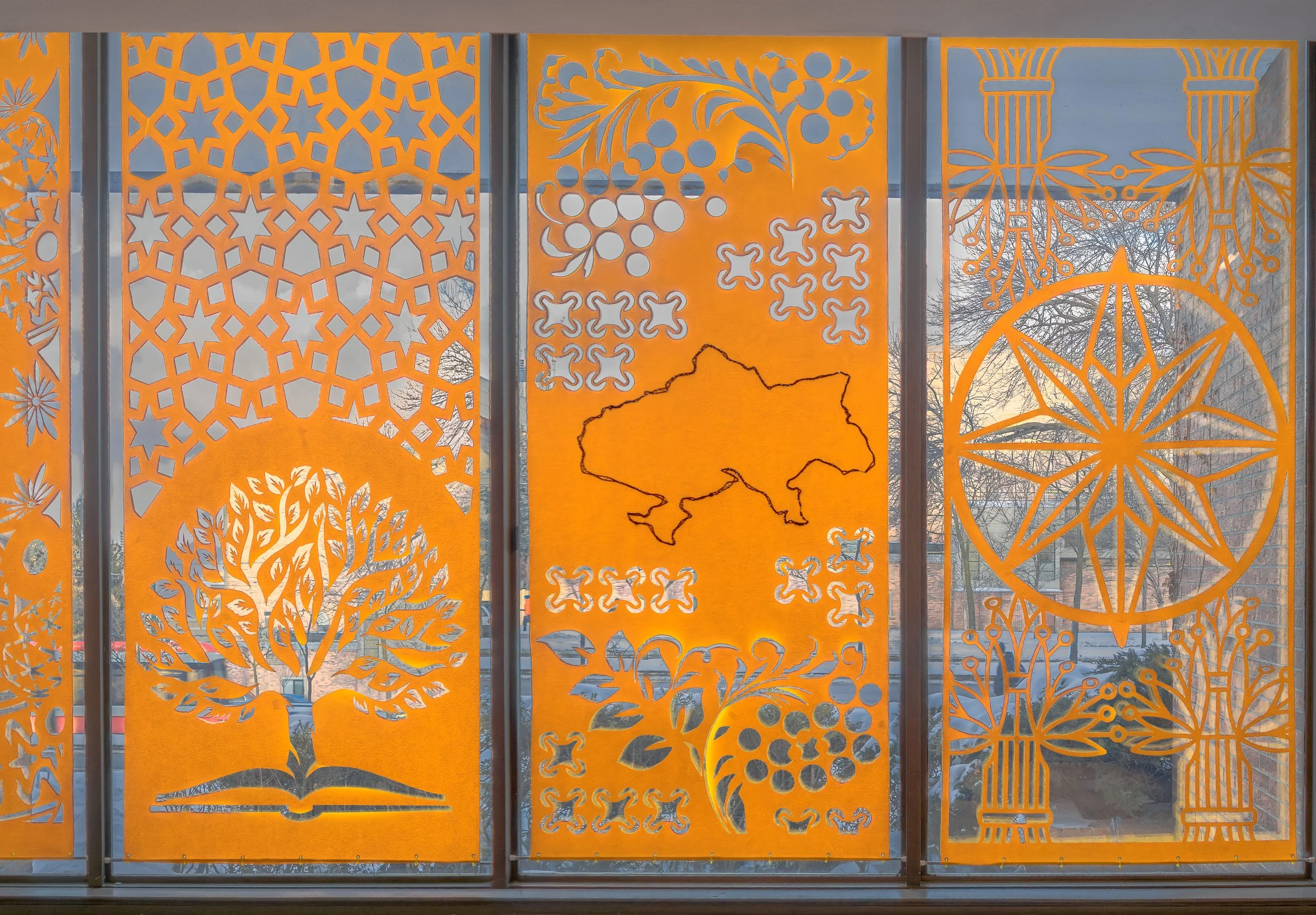
Rendered in warm yellow paper, the installation glows from within during daylight hours and reveals intricate shadow patterns after dark. The color choice references the sun, vitality, and inner warmth, offering a quiet counterpoint to Toronto’s long winter season. Rather than spectacle, Paper Light proposes presence: a calm, radiant intervention in the city’s everyday visual field.
A Calendar of Memory and Continuity
The installation unfolds as a symbolic calendar of twelve months, where each window holds a distinct narrative while contributing to a cohesive visual system. Together, they trace a cycle of rituals, labour, loss, resilience, and renewal — forming a contemporary cultural map readable beyond national borders.
Rooted in Ukrainian tradition yet articulated through a modern graphic language, Paper Light treats ornament as information and craft as cultural memory. The architectural rhythm of the Institute serves as an active framework, reinforcing its role as a visible marker of Ukrainian presence in Toronto’s multicultural landscape.
“Paper Light is not a decorative gesture or a nostalgic reference,” says Bielohryvtseva. “It is a way of speaking about Ukrainian identity through a traditional language that finds a new form in the contemporary city. The narratives are intuitive and accessible, regardless of cultural background.”
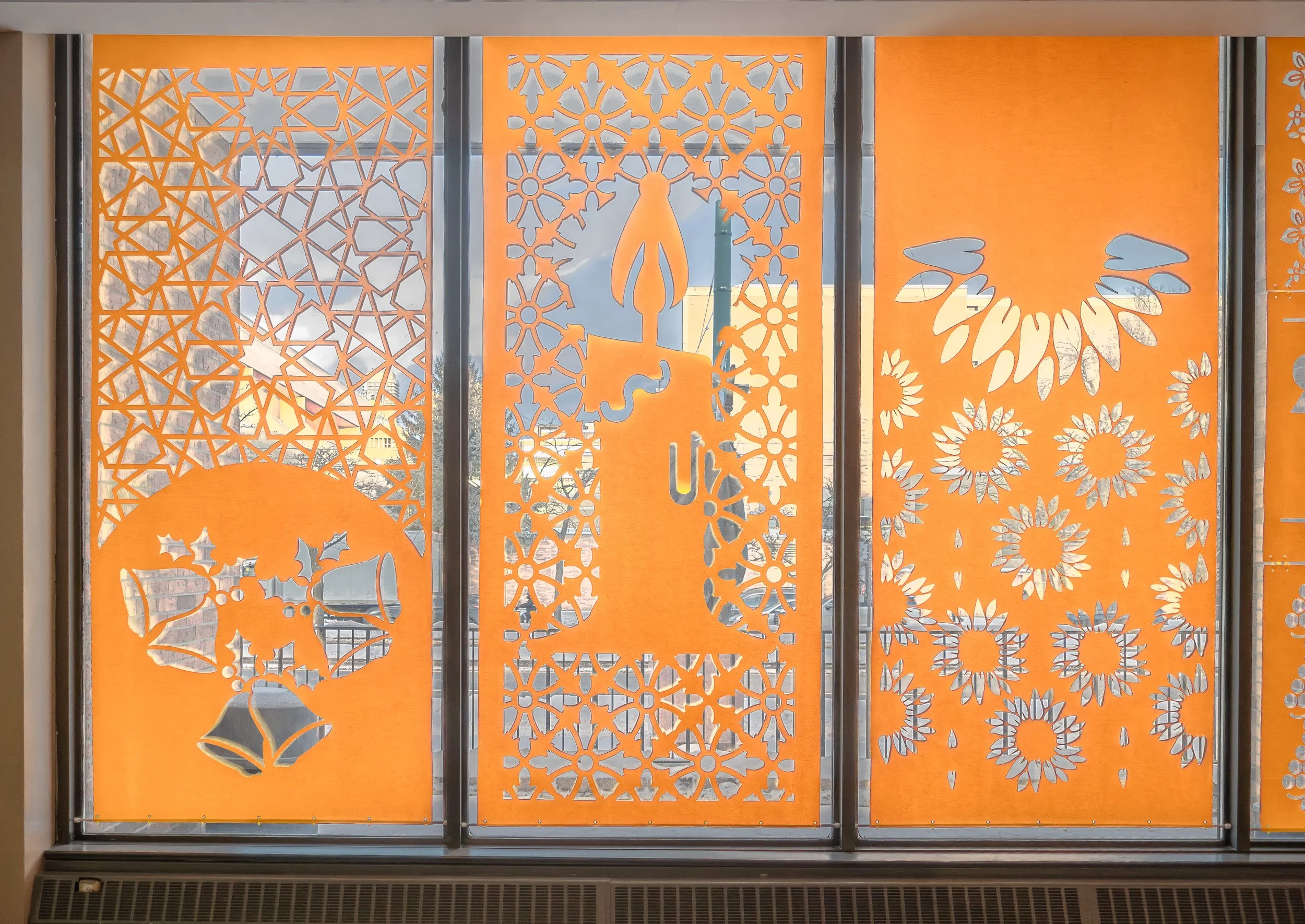
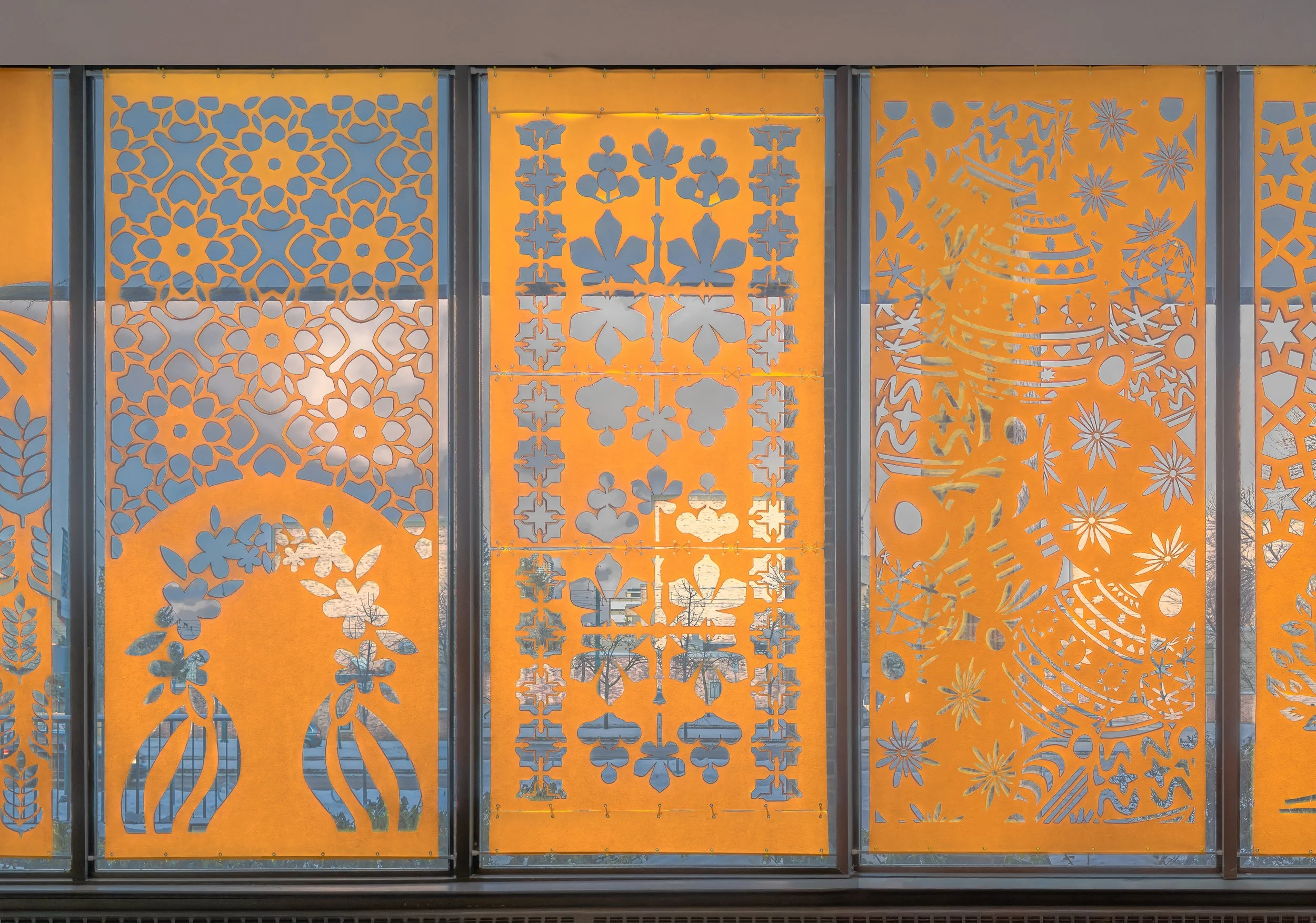
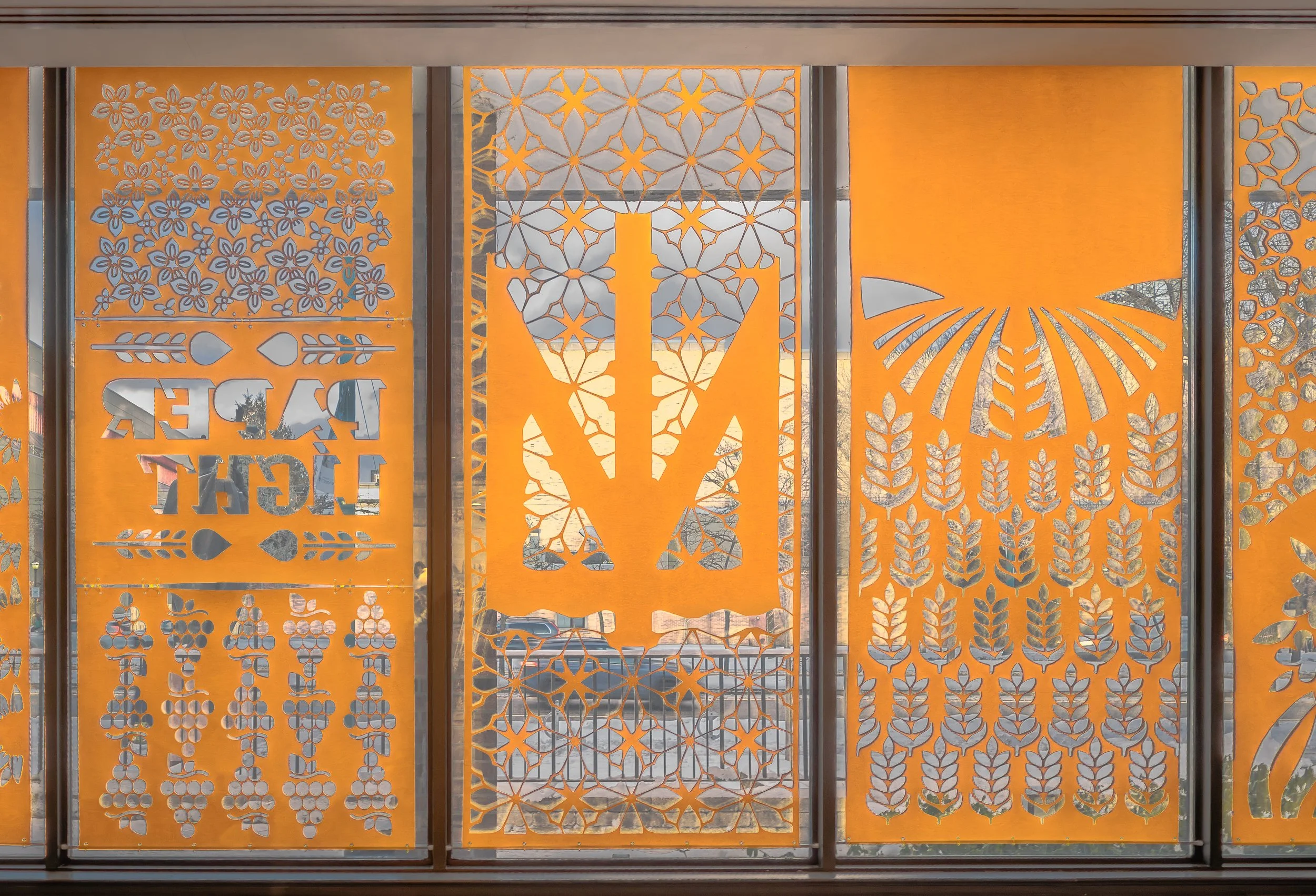
The Twelve Windows
January — A Christmas star supported by four didukhs represents ancestry, continuity, and collective beginnings.
February — An embroidered silhouette of Ukraine (1991), viburnum branches, and drones reflect loss, resistance, and the ongoing struggle for peace.
March — A tree with severed roots evokes displacement, while Shevchenko’s Kobzar anchors memory.
April — Pysanky symbolize rebirth and the cyclical nature of life.
May — Embroidery motifs, chestnuts, and lilacs form a rushnyk-like composition of belonging and community.
June — Floral fields and wreaths reference Kupala traditions and seasonal rhythm.
July — Young wheat fields speak to labor, anticipation, and Ukraine’s role as a breadbasket — even in wartime.
August — The trident emerges from a flowering field, echoing national identity and the Institute’s symbolism.
September — A moment of bloom and beginnings; here, light becomes literal tradition.
October — Sunflowers represent fertility, work, and life’s closed cycle.
November — A candle marks Pokrova and Holodomor Remembrance Day — silence, prayer, and collective grief.
December — A straw spider and bells conclude the year with harmony and the echo of Shchedryk (Carol of the Bells).
Contemporary Craft in the Urban Context
By scaling vytynanka beyond its domestic origins, Paper Light positions craft as an architectural and social language. The project exists at the intersection of art, design, and architecture, offering a restrained yet confident expression of cultural continuity—one that does not demand attention but rewards it.
Paper Light is presented as part of the DesignTO Festival 2026 (January 23 – February 1) at the St. Volodymyr Institute in Toronto and will remain on view through the end of February.
Artist Anastasiia Bielohryvtseva
Photo credit Valeriia Vaprlnyk
