
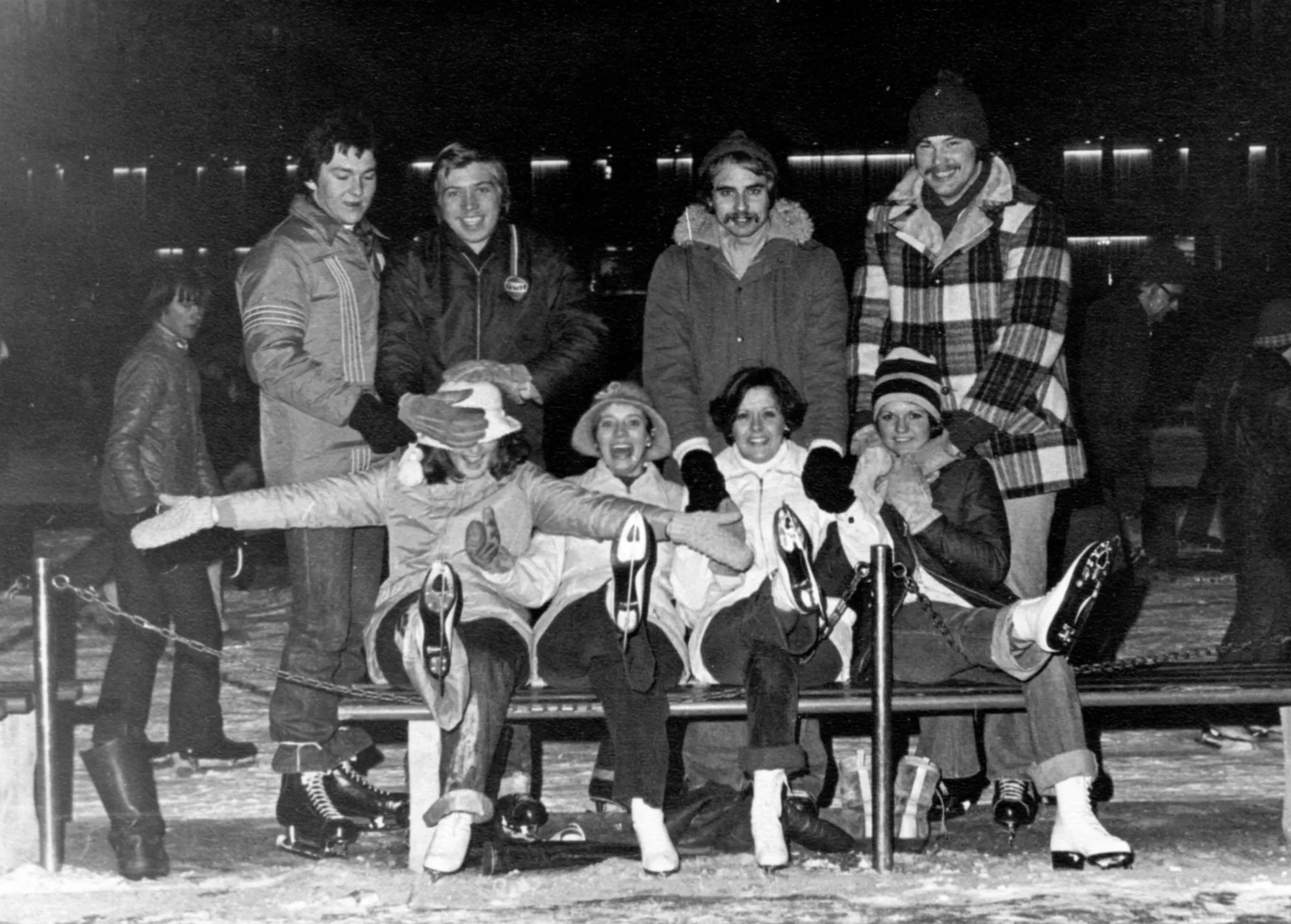
SVI residents skating at City Hall, 1976.
This Giving Tuesday, we’re sharing stories that connect SVI’s past with the people discovering it today. We interviewed Daria Olynyk, a former resident, board member and long-standing supporter of SVI, to learn what student life was like at the Institute in the 1970s.
SVI was first built as a student residence, by the Ukrainian Canadian Orthodox community, for young people from rural communities who came to Toronto to study. Daria Kuch Olynyk was at the opening of the new Institute at 620 Spadina Avenue in 1969. A year later she moved in as a student, and she lived there for seven years. She was one of many young people from across Southern Ontario who looked forward to moving into SVI.
Many of the students already knew each other through the Ukrainian Canadian community, the hromada, and spent a lot of time together outside of class. “It was a very warm, congenial place,” Daria remembers. They created their own programming: they went carolling, watched and played hockey games, walked up the street to local bars and venues, and skated at City Hall. On Friday nights, Club 620, a pub at the Institute, brought students from all over to SVI, much like INSTITUT does today.
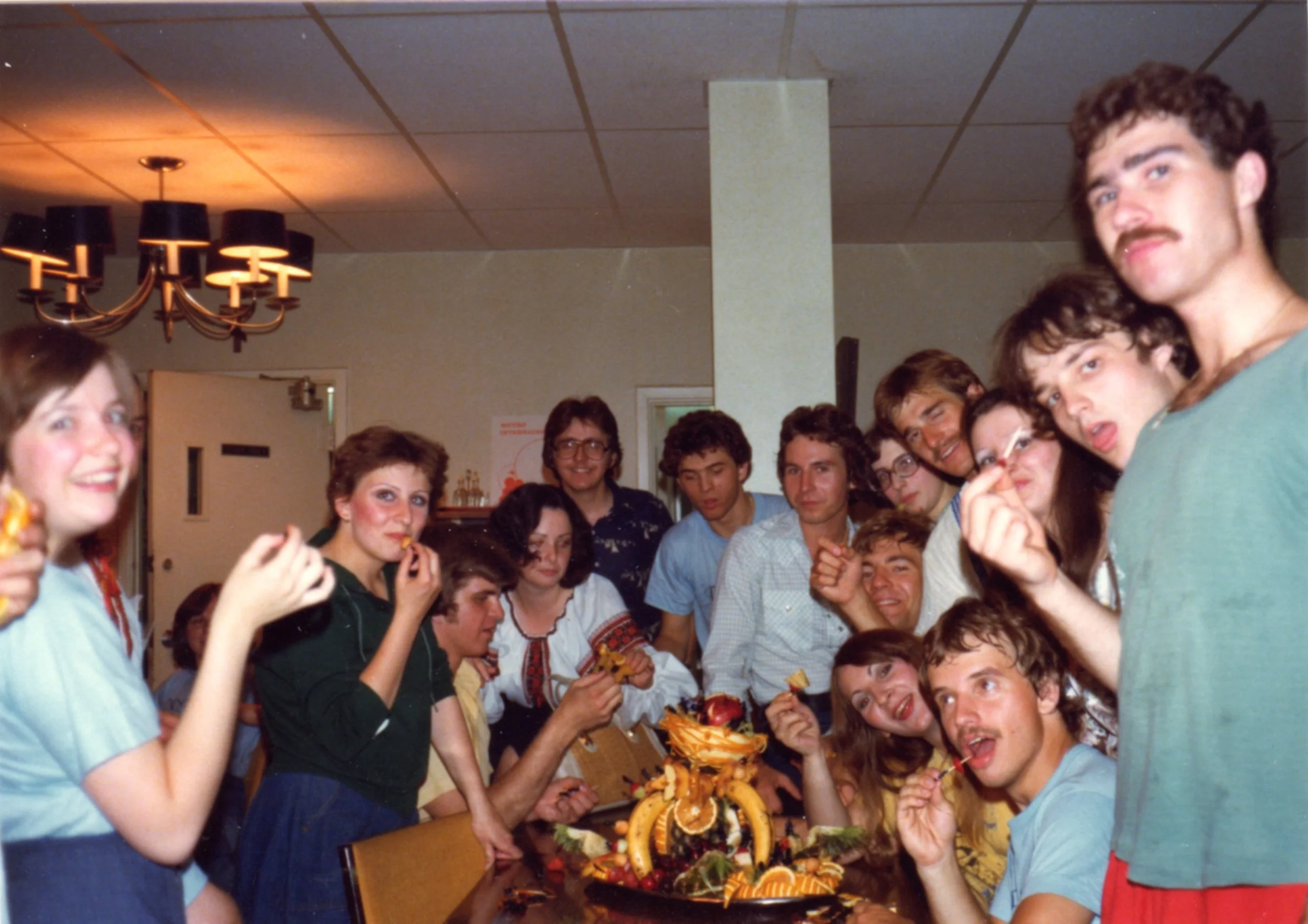
Students at the Caravan in 1978
For students who couldn’t go home for the holidays, the Institute’s kitchen made sure there was a traditional meal for Sviatyi Vechir (Ukrainian Christmas Eve) and Velykden (Easter). “We used to call it a home away from home.” Many of the friends Daria made at St. Volodymyr Institute are still her friends today. “This is a gift!” she says.
A launching pad
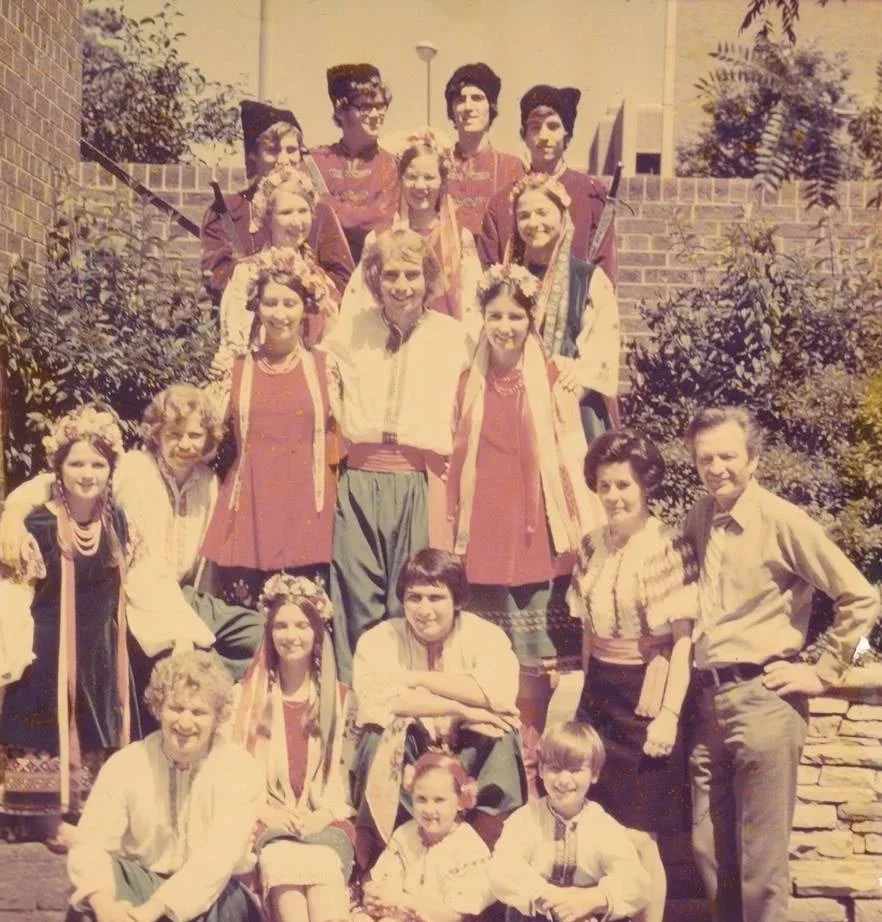
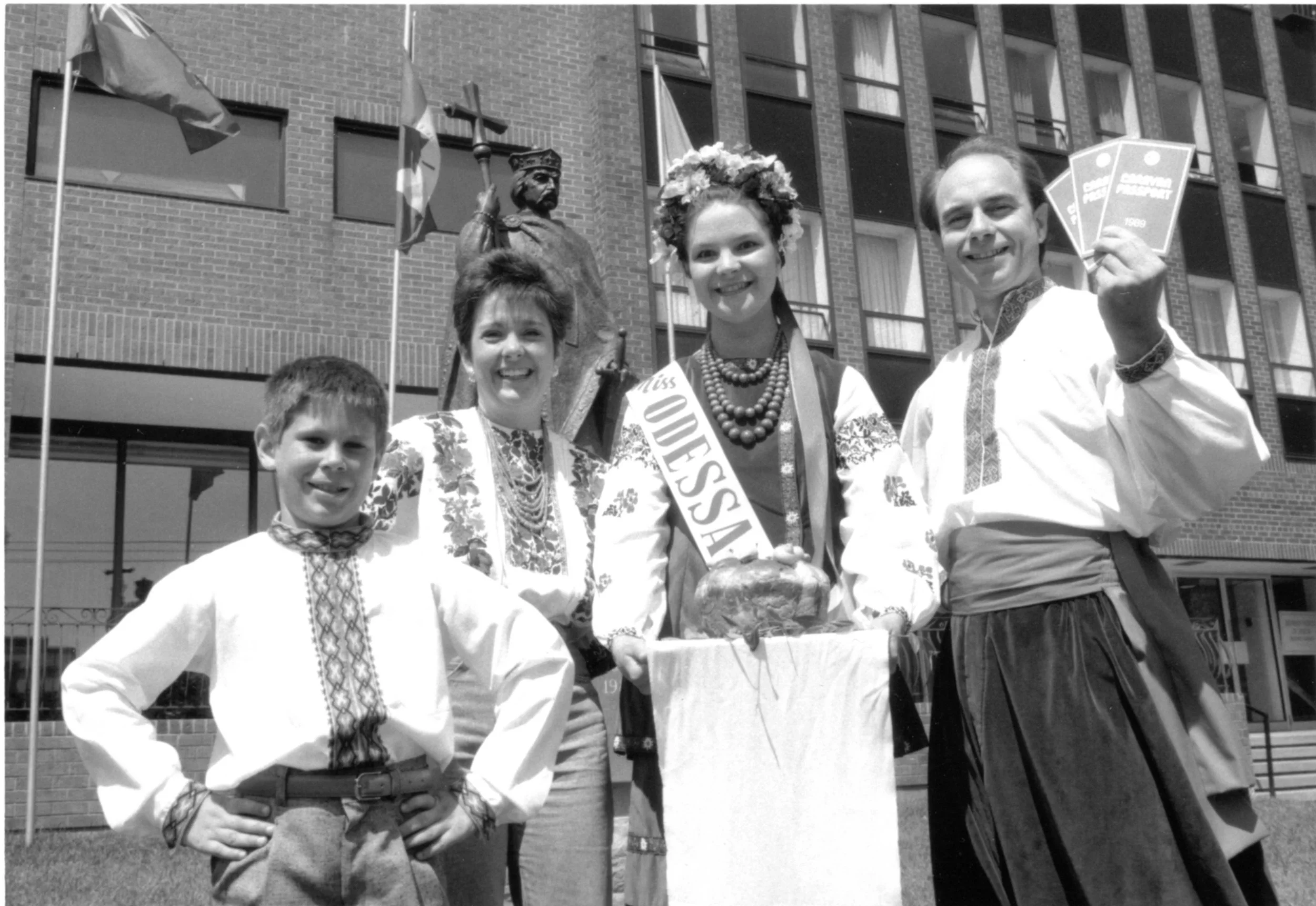
The Odessa Pavilion at Caravan, 1972
SVI was a multi-generational place, where age didn’t matter and young people were encouraged to take on leadership roles.
In many communities at the time, young people heard “Ty shche molodyi, nichoho ne znaiesh”: you’re still young, you don’t know anything. Not at SVI. “The energy the students had and the thoughts the students had were embraced and taken seriously,” Daria says. “The Institute was like a launching pad. It gave a lot of people of my generation opportunities that morphed into careers, or jobs, or marriage.”
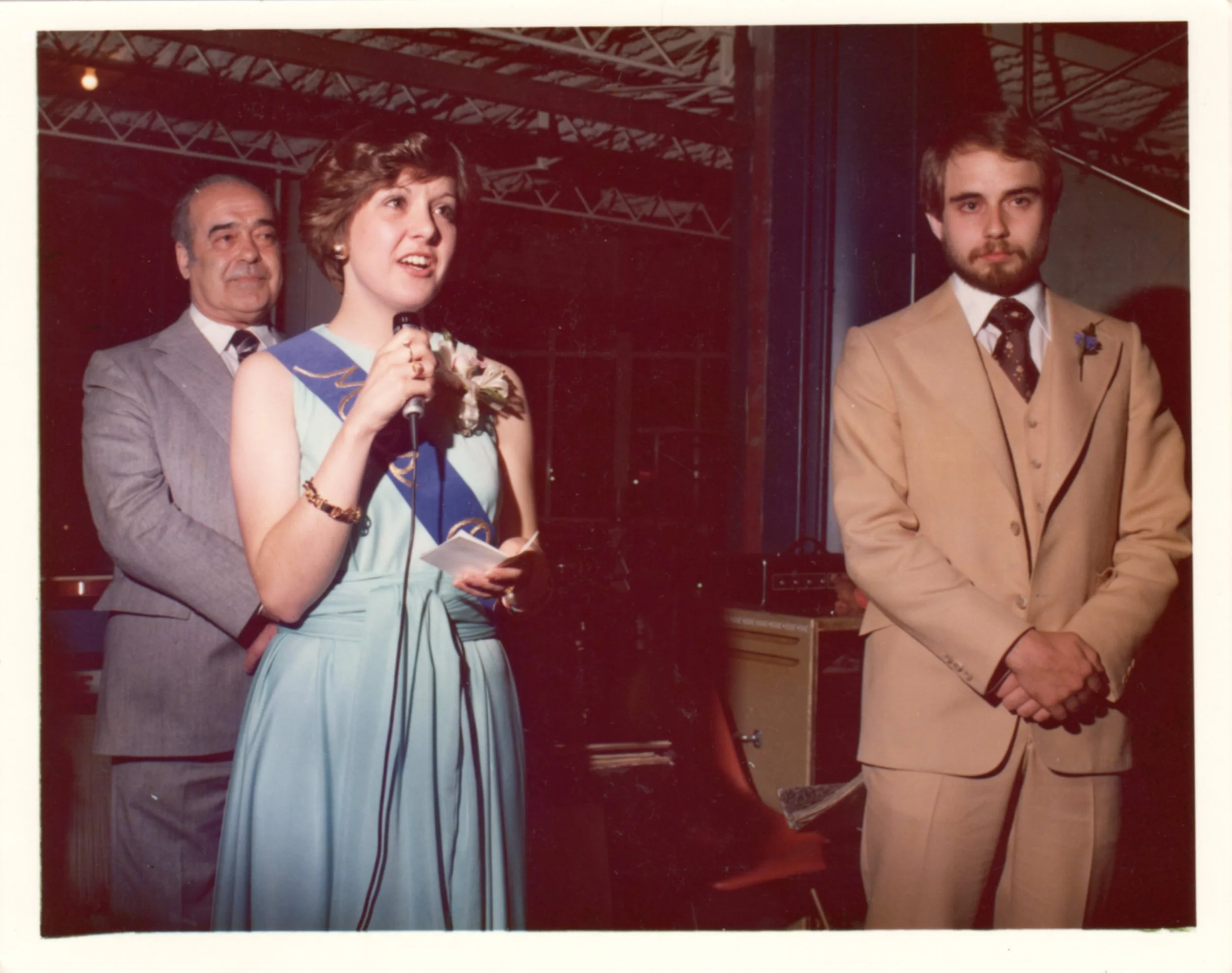
Daria and Mark Olynyk at the Odessa Pavilion, 1975
This was especially true of the Odessa Pavilion at Metro International Caravan, Toronto’s festival of multiculturalism. Caravan filled the building with hundreds of volunteers for ten days. Starting in 1974, Taras Shipowick, then 22, ran the pavilion’s entertainment for four consecutive years. Caravan also brought SVI to the wider city, at a time when many organizations focused only on their own community.
When the directors asked Daria to chair the pavilion in 1983, she said yes, with one condition: “I would like to be on the board.” She was 31. She went on to chair the pavilion three times and served several terms on the board. In 1984, Toronto’s sesquicentennial year, the Odessa Pavilion won best pavilion, best mayor and best entertainment, along with an award for exterior design. The belief in youth led to great results for everyone.
Art that set the bar
SVI’s programming felt different from what other communities offered, Daria says:
“A lot of what happened at the Institute had a lot of foresight and broke new ground in our Ukrainian hromada. It didn’t matter where you came from: the approach at the Institute was always more contemporary and more relevant.”
In her early years at the Institute, women in the community stepped up to form an Art Committee. Several of them had built a relationship with William Kurelek and brought an exhibit of his pioneer women paintings to SVI. “I remember so clearly going to that,” she says. “I was smitten by Kurelek, and I still am. It was a unique opportunity just to see an exhibit of that calibre at the Institute.”
It was also at SVI that Daria first saw the work of Natalka Husar, then making ceramics and collage that were “very avant-garde, and not traditional, that’s for sure.” And she remembers hearing about plans to make a documentary film about the Famine. That project became Harvest of Despair, and the committee behind it was one of the seeds of today’s Ukrainian Canadian Research and Documentation Centre.
“It was a very nurturing environment,” she says, “and a very enabling environment.”
Still a hub
Daria still comes to SVI. This summer, she was in the room for Oksana Hawrylak’s conversation with Natalka Husar at INSTITUT, decades after first seeing Husar’s work at the Institute. “It was one of the most enlightening things I’ve attended in the last year.”
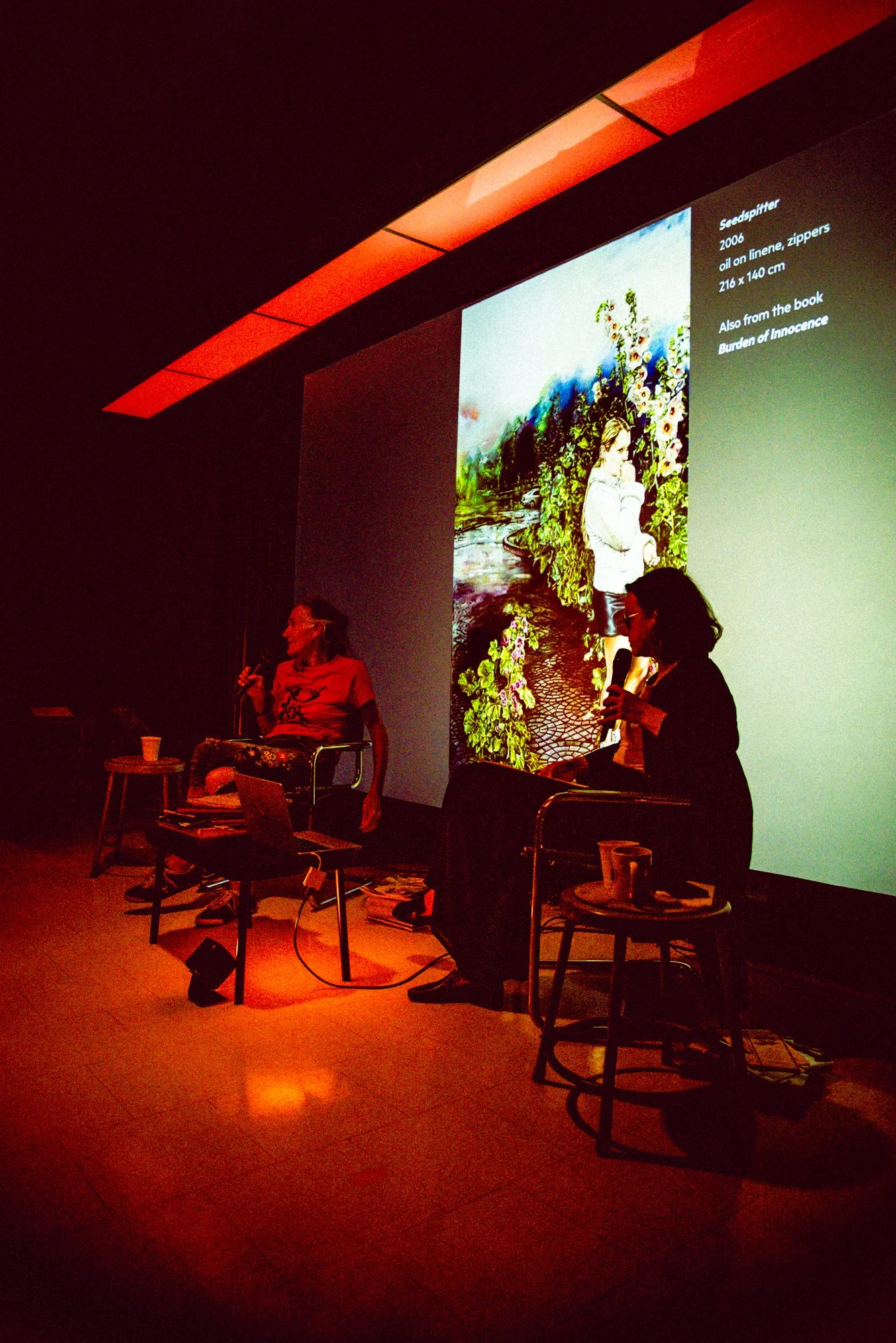
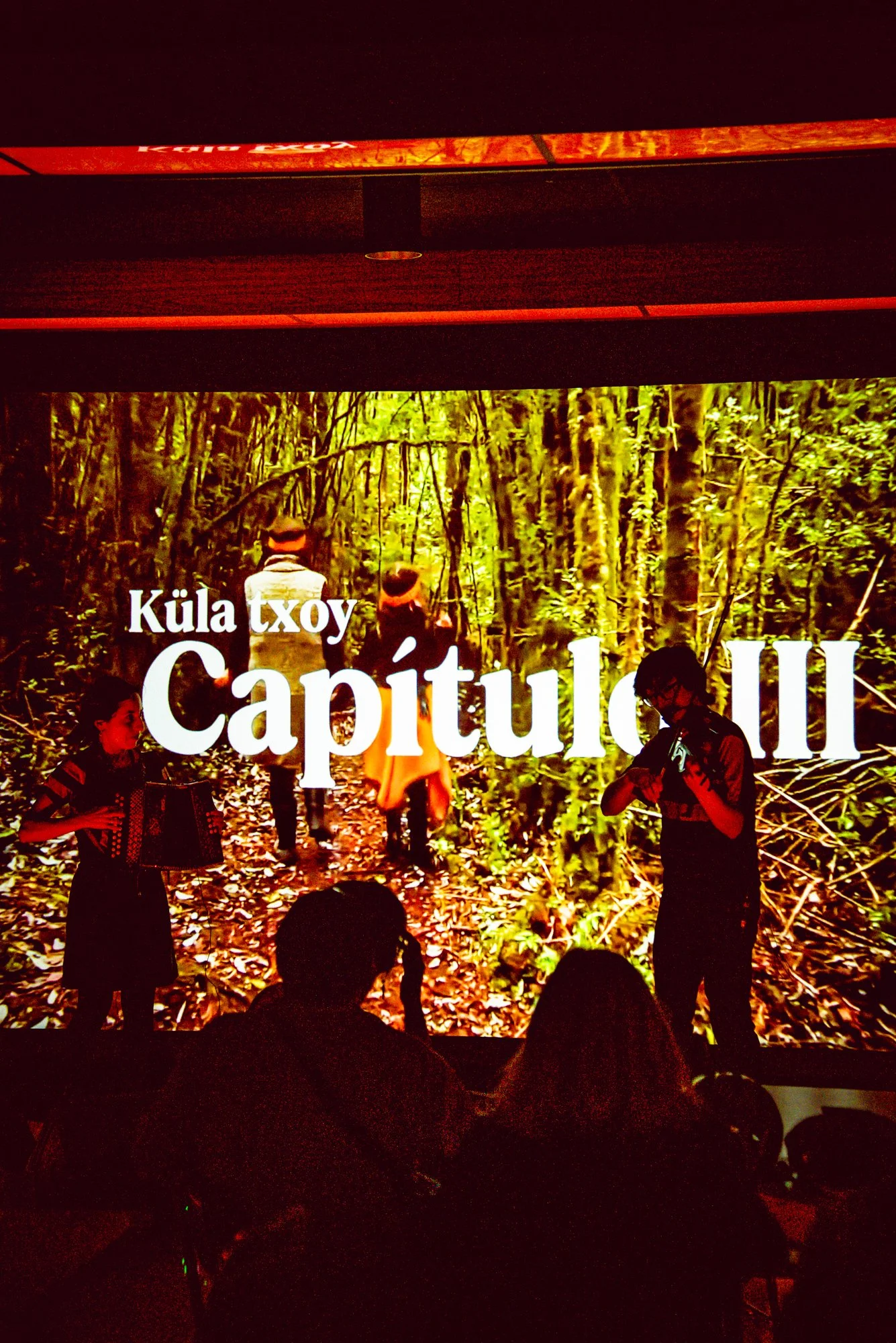
Oksana Hawrylak and Natalka Husar in conversation at INSTITUT; Pajaros Kiltros at INSTITUT, July 9, 2026. Photos: @jesussister
Looking at the programming now, she sees the place she knew. “There was something there for everyone. No matter what you were interested in, no matter what age you were, there was something happening at the Institute.”
Asked why people should support SVI today, she doesn’t hesitate. Ukraine’s cultural institutions and artists are under attack. “Now it’s more important than ever that we not only preserve what we have, but take it out into the world and showcase it, because Ukrainian culture is incredibly rich.”
She also points to what SVI has always been: a hub of activity in downtown Toronto, where students, professors, community organizations and guests from around the world come together and share with each other.
And her advice for anyone walking into SVI for the first time? “Enjoy and appreciate everything that’s offered here. Take advantage of it.”
Be part of the next chapter
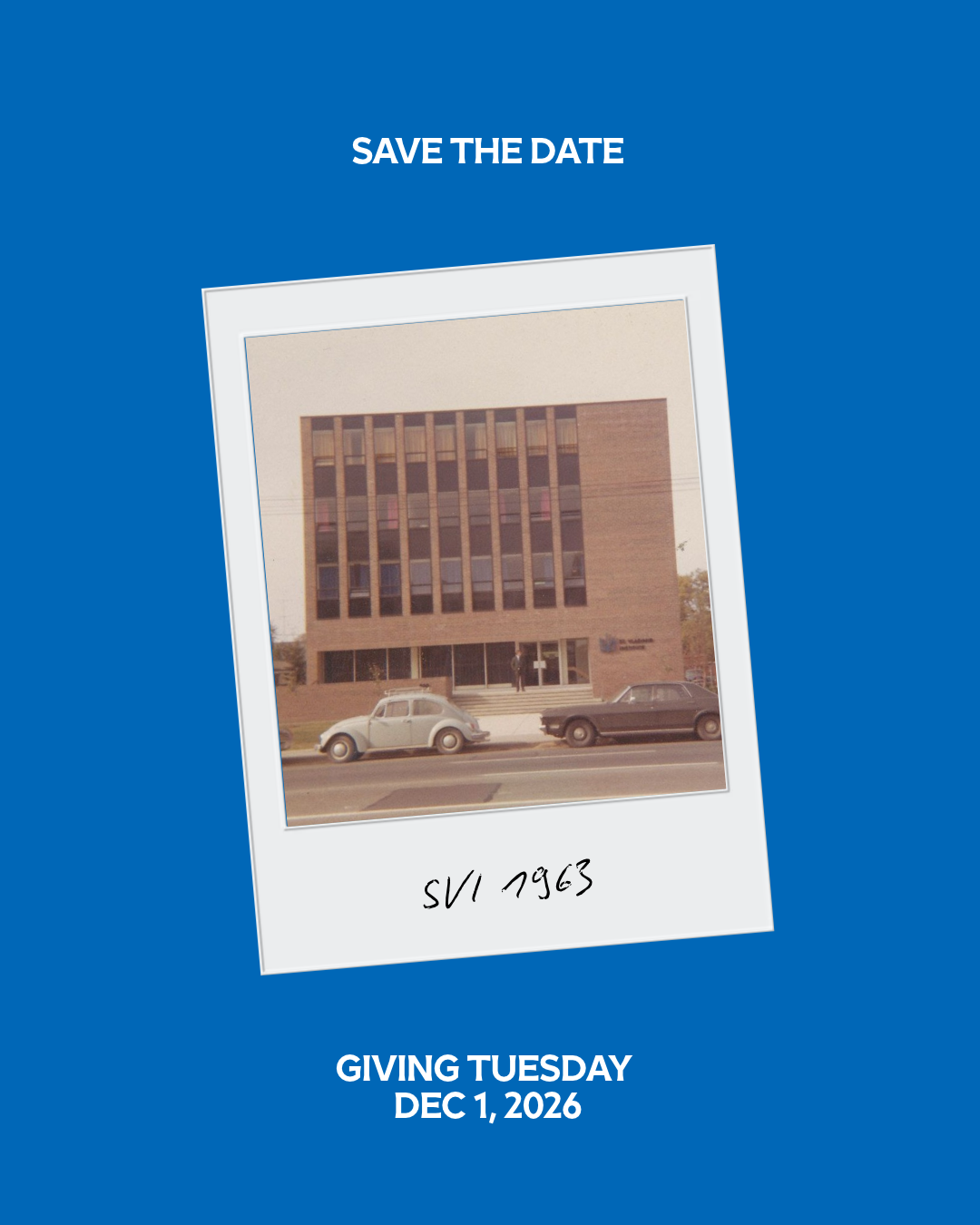
On Tuesday, December 1, SVI joins GivingTuesday and launches our year-end campaign. Our goal is 200 supporters by December 31, and the way to join is simple: make a gift. Whether you give $5, $50 or $500, every gift counts as one more voice.
Save the Date: Add to Google Calendar
Have an old photo from SVI? We’d love to see it. Send it to violetta@stvolodymyr.org
Daria Olynyk is a former resident, board member and long-standing supporter of St. Volodymyr Institute.
